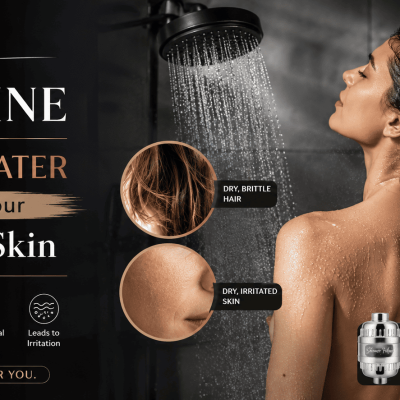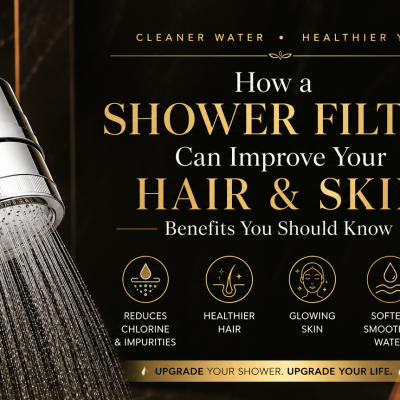
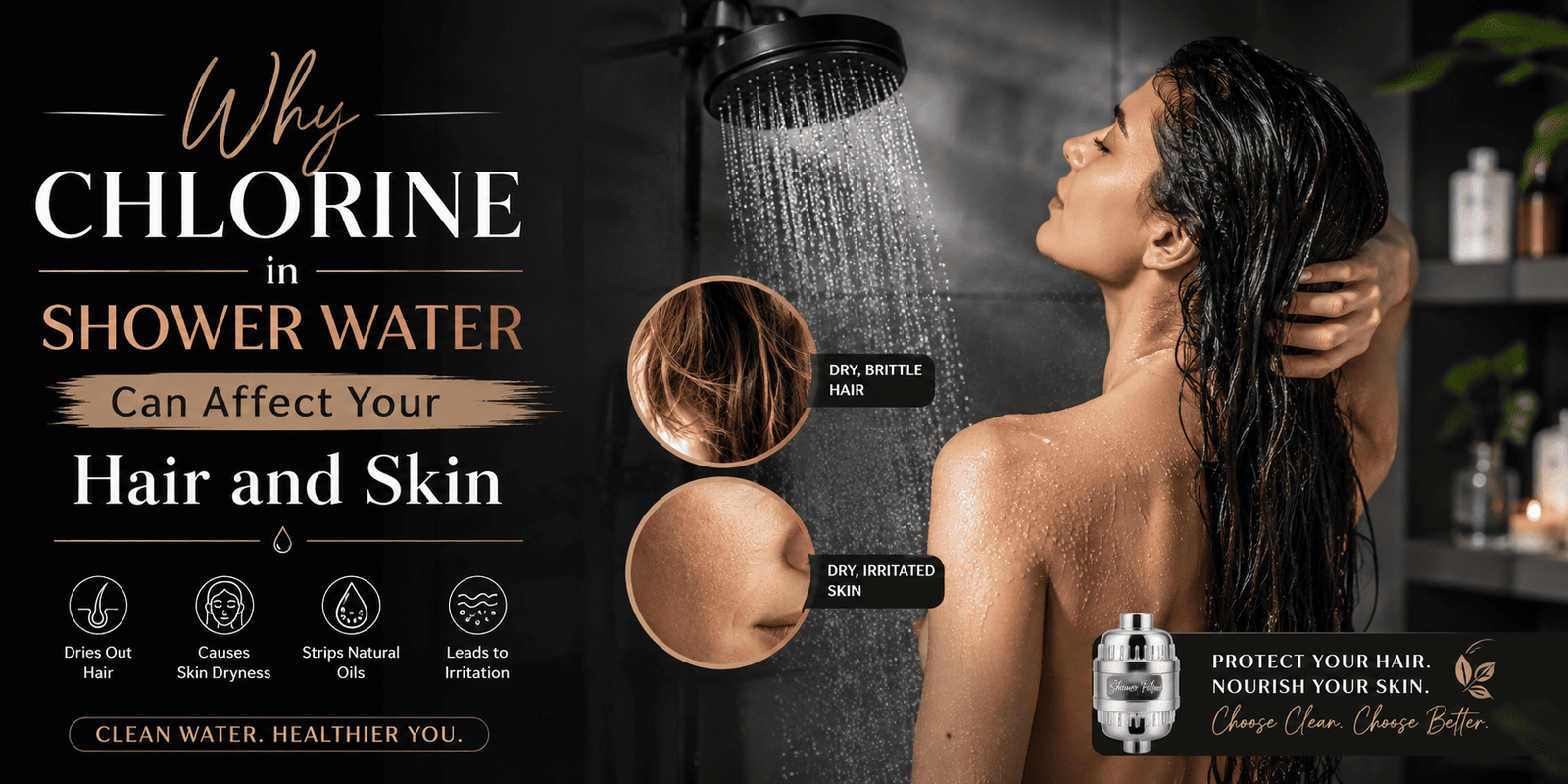
If you’ve ever stepped out of the shower with skin that feels tight and itchy, or hair that looks dull no matter how much conditioner you use, the water itself might be part of the problem. Most municipal water systems use chlorine to kill bacteria and keep tap water safe to drink. That’s a good thing for public health, but the same chemical that disinfects your water supply can be tough on your hair and skin when you shower in it every day.
In this post, we’ll break down what chlorine actually does to your body, why it’s more noticeable for some people than others, and how a simple shower filter can make a real difference.
What Chlorine Does to Your Water
Chlorine is added to tap water because it’s an effective, low-cost way to neutralize harmful microorganisms before water reaches your home. It’s a standard part of water treatment in most cities, and in the amounts used, it’s considered safe to drink.
The issue isn’t chlorine in a glass of water — it’s chlorine in hot shower water, where heat and steam change how your body interacts with it. Hot water opens your pores and hair cuticles, which means more chlorine can come into contact with your skin and scalp. Steam also allows you to inhale trace amounts of chlorine gas released from the water. None of this is usually dangerous, but for many people it adds up to noticeable everyday irritation.
How Chlorine Affects Your Hair
Hair is mostly made of a protein called keratin, held together by natural oils that keep each strand smooth and flexible. Chlorine is a strong oxidizer, meaning it breaks down organic material — including those natural oils.
Here’s what that can look like in practice:
- Dryness and brittleness. Repeated exposure strips away the scalp’s natural oils, leaving hair feeling rough, straw-like, or prone to breakage.
- Dull color. Chlorine can fade dyed hair faster and make even natural hair color look flatter over time.
- Scalp irritation. Without enough natural oil to protect it, the scalp can become dry, flaky, or itchy.
- Weakened strands. Hair that’s already fine, color-treated, or chemically processed is especially vulnerable to chlorine damage, since it has less natural protection to begin with.
This is where a shower filter for hair becomes worth considering. By reducing the amount of chlorine that reaches your scalp and strands in the first place, you give your hair’s natural oils a better chance to stay intact between washes.
How Chlorine Affects Your Skin
Skin faces a similar problem. Your skin has a thin, protective barrier of natural oils and lipids that keeps moisture in and irritants out. Chlorine can disrupt that barrier, especially with daily hot showers.
Common effects include:
- Dry, tight-feeling skin right after showering, even in humid climates.
- Increased sensitivity or redness, particularly for people who already deal with eczema, psoriasis, or generally sensitive skin.
- Itchiness, sometimes mistaken for dry weather or an allergic reaction to soap.
- Premature signs of aging, since a compromised skin barrier can make fine lines and rough texture more noticeable over time.
If you’ve tried switching soaps or adding more moisturizer without much improvement, the water itself may be the missing piece. A shower filter for skin works by addressing the irritant at the source, rather than just treating the dryness after it happens.
Why Some People Notice It More Than Others
Not everyone reacts to chlorinated water the same way. A few factors make a noticeable difference:
- Water chlorine levels. Treatment levels vary by city and even by season, so some tap water is more heavily chlorinated than others.
- Shower length and temperature. Longer, hotter showers mean more exposure time and more open pores and cuticles.
- Skin and hair type. People with naturally dry skin, sensitive skin conditions, or fine or chemically treated hair tend to feel the effects more quickly.
- Frequency of washing. Showering once or twice a day adds up to significant cumulative exposure over weeks and months.
If you fall into one or more of these categories, you may be more likely to benefit from filtering your shower water.
What a Shower Filter Actually Does
A shower filter attaches between your shower arm and showerhead (or is built into certain showerhead designs) and works to reduce chlorine and other contaminants before the water reaches your body. Most use one or a combination of the following:
- KDF (Kinetic Degradation Fluxion) media, which uses a copper-zinc alloy to reduce chlorine through a chemical reaction.
- Activated carbon, which absorbs chlorine and some other impurities.
- Vitamin C cartridges, which neutralize chlorine through a different chemical process and are popular for their simplicity.
The goal of any shower water filter is the same: reduce the amount of chlorine (and sometimes other minerals or particulates) that touches your hair and skin, without significantly affecting water pressure or flow.
Signs You Might Benefit From a Shower Filter
You don’t need a water quality report to know something might be off. Consider a shower filter if you notice:
- Skin that feels dry or tight shortly after every shower, regardless of moisturizer use.
- Hair that feels rough, tangled, or “hard” no matter which shampoo or conditioner you use.
- A faint chemical or pool-like smell in your shower water.
- Color-treated hair that fades faster than expected.
- Ongoing scalp itchiness or flaking that isn’t tied to a specific hair product.
- Skin conditions like eczema that seem to flare up after showering.
If several of these sound familiar, filtering your water is a low-effort change that’s worth testing.
Getting the Most Out of a Shower Filter
Installing a filter is a good first step, but a few habits help you get more benefit from it:
- Replace filter cartridges on schedule. Most lose effectiveness over a few months, even if water still flows normally.
- Lower your water temperature slightly. Very hot water still opens pores and cuticles more than warm water does.
- Shorten shower time where you can. Less exposure time means less cumulative effect, filtered or not.
- Follow up with a good moisturizer and conditioner. A filter reduces the source of irritation, but replenishing lost moisture still helps your skin and hair recover.
Final Thoughts
Chlorine plays an important role in keeping tap water safe, but that doesn’t mean it’s doing your hair and skin any favors in the shower. If you’ve been dealing with unexplained dryness, dullness, or irritation, it may not be your products — it could be your water. A shower filter is a simple, low-maintenance way to reduce chlorine exposure at the source, and for many people, it’s the missing step in an otherwise solid hair and skincare routine